Nomzamo Khosa · Elevate Finance Partners · 30 May 2026 · 10 minute read
A faith-based, practical guide for South Africans to face debt without shame and create a realistic repayment plan for financial freedom.
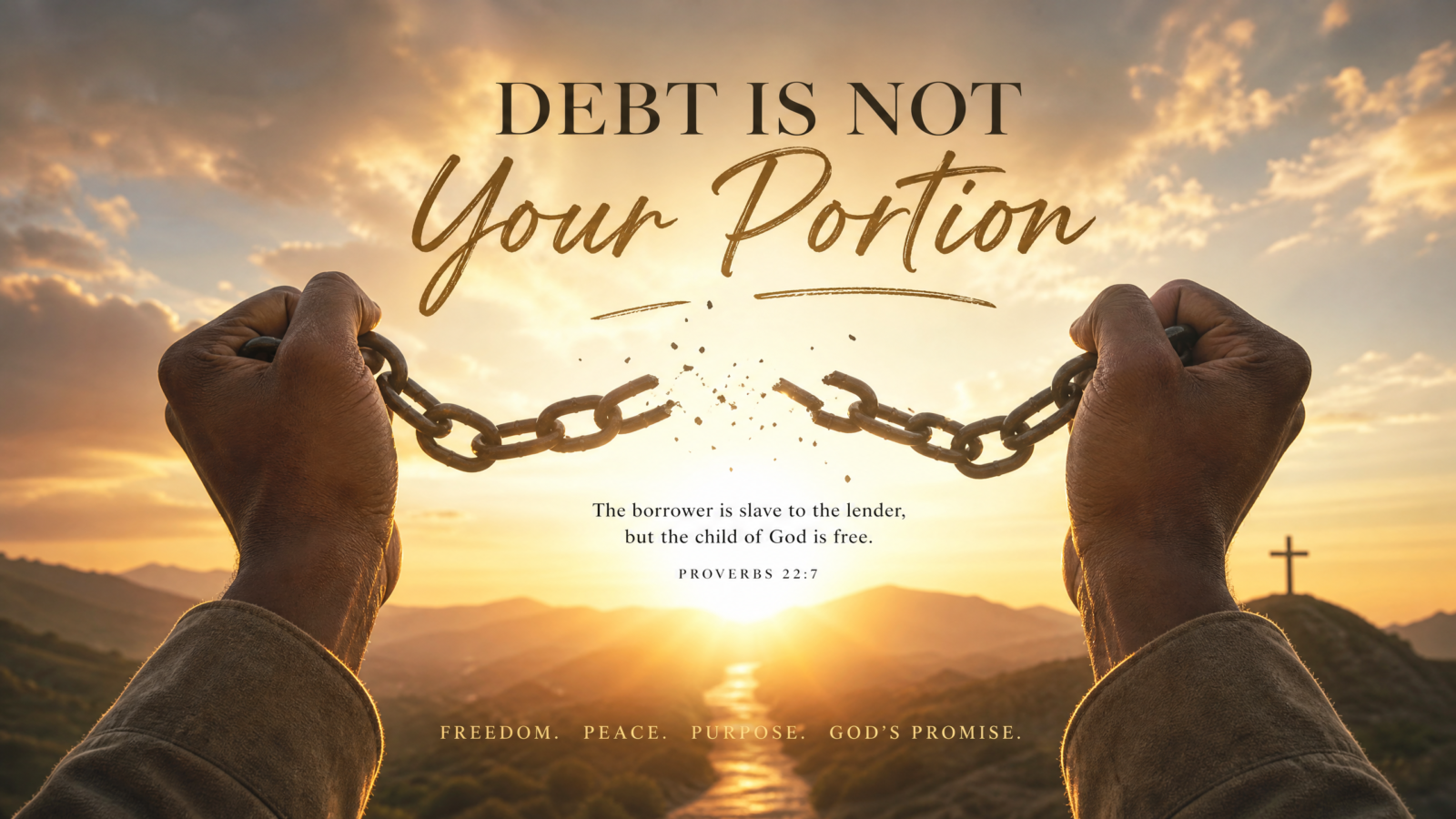
| We have come to the last Friday of May. And I want to close this month the way I believe every month should close — not with a sigh of relief that it is over, but with a declaration over what is coming. So before we go any further, say this with me: Debt is not my portion. Financial freedom is. I do not know where you are sitting as you read this. Maybe the month has been tight. Maybe a statement arrived this week that made your stomach drop. Maybe you have been carrying the weight of debt so long that it has started to feel like a permanent part of your identity. It is not. That is what today is about. |
|---|
I have sat across from enough people in banking, in motor finance, and in this community to know one thing with certainty:
Debt does not discriminate. It touches the educated and the uneducated. The employed and the self-employed. The faithful and the faithful-in-progress. It does not arrive because you are careless or irresponsible or lacking discipline. It arrives because life is expensive, income is uncertain, and most of us were never taught the rules of a financial system that was designed by people who assumed we already knew them.
But here is what I also know:
Debt is not a life sentence. It is a season. And seasons change.
The woman in 2 Kings 4 had creditors at her door. Not metaphorical creditors — real ones, threatening to take her sons as payment for her late husband’s debts. She did not deny the debt. She did not run from it. She faced it, brought it to God, acted on the instruction she was given, and watched the oil multiply until the debt was fully paid.
She faced it. She moved. She was free.
That is the testimony available to you today. Not magic — movement. Not a miracle that bypasses your participation — a miracle that meets it.
Let us talk about how to move.
Why Debt Feels Bigger Than It Is — And Why That Matters
Debt is one of those things that grows in the dark.
When we do not look at it — when we avoid opening the statements, when we stop answering calls from unknown numbers, when we mentally round down what we owe to something more comfortable — the weight of it does not shrink. It expands. Because to the anxiety it creates, you add the anxiety of not knowing, and that combination is heavier than the actual number almost every time.
The first and most important thing you can do about debt is look at it.
Not to punish yourself. Not to spiral into shame. But because a named, numbered thing is something you can make a plan for. A vague, avoided thing just follows you.
“My people are destroyed from lack of knowledge.” Hosea 4:6 (NIV)
Avoidance is not peace. It is just delayed pain with interest added. And in South Africa, where personal loan interest rates can reach 29.25% per annum (the NCA prescribed maximum), the cost of avoidance is very literal.
The moment you open the statement, write down the balance, and say this is what I am dealing with — you have already done the hardest part. Everything after that is a plan.
The South African Debt Landscape: What You Are Actually Up Against
Before we build a plan, let us name the reality clearly. South African households are carrying significant debt loads — and the structure of that debt matters.
Credit cards and store accounts typically carry the highest interest rates — often between 20% and 22% per annum. These are the most expensive forms of debt you can hold and the most urgent to address.
Personal loans from registered credit providers can carry rates up to the NCA maximum of 29.25% per annum. Micro-lenders (mashonisas) and unregistered lenders can charge far more — and are not bound by NCA protections. If you have debt with an unregistered lender, seek advice from a debt counsellor or the NCR immediately.
Vehicle finance is typically more structured, with fixed instalments over a set term. The danger here is balloon payments — lump sums due at the end of the finance term that many buyers do not budget for. If your vehicle finance has a balloon payment, know the amount and start planning for it now.
Home loans carry lower interest rates but the longest terms — meaning the total interest paid over 20 years can significantly exceed the original purchase price. Making even small additional payments on your bond has a disproportionately powerful effect on the total cost and repayment term.
Retail accounts — Edgars, Truworths, Woolworths Financial Services, Ackermans — are convenient but expensive. Many carry interest rates that rival credit cards. If you have multiple retail accounts, consolidating awareness of the total balance is urgent.
Understanding which type of debt you carry — and what it is costing you monthly in interest — is not optional. It is the foundation of any repayment plan.
The Shame Conversation We Need to Have
I want to stop here and speak to something that I know is present in this conversation for many of us, even if it is not spoken.
Shame.
The specific, suffocating shame of feeling like your debt is a reflection of your character. Like the balance on your credit card is a verdict on your worth. Like the fact that you are in this situation means you have failed at something fundamental.
It does not.
Debt is a financial condition — not a spiritual one. It does not disqualify you from God’s promises. It does not make you less worthy of financial freedom. And it does not mean the story ends here.
“There is therefore now no condemnation for those who are in Christ Jesus.” Romans 8:1 (NIV)
No condemnation. That includes financial condemnation. That includes the voice in your head that replays every purchase and asks how did you let it get this far?
You are not condemned. You are in a process. And a process has a next step — which means it has an end.
Let the shame go. It is not a tool that helps you repay anything. It is dead weight on a journey that requires all the energy you have.
Pick up the plan instead.
Your Faith-Based Debt Repayment Framework
Here is a practical, step-by-step approach to debt repayment that works within a South African context — and that is grounded in the same stewardship principles we build everything on in this space.
Step 1: Take Full Inventory
Write down every debt you carry. Every single one. Include:
- The creditor name
- The outstanding balance
- The monthly minimum repayment
- The interest rate
- The remaining term (if applicable)
Do not estimate. Pull the statements. Log into the accounts. Call the creditor if you need to. Get the real numbers.
This exercise is uncomfortable. It is also one of the most financially powerful things you will do this year. You cannot map a route if you do not know where you are starting from.
Total your outstanding balances. Total your minimum monthly repayments. Write both numbers down. Now you know what you are dealing with.
Step 2: Choose Your Repayment Strategy
There are two primary debt repayment strategies — and both work. The right one for you depends on your personality as much as your maths.
The Debt Snowball (smallest balance first) List your debts from smallest balance to largest. Pay minimum repayments on everything. Put every extra rand toward the smallest debt until it is gone. Then roll that payment into the next debt. Repeat.
Why it works: Early wins build momentum. Closing accounts feels like progress — because it is. For people who need psychological fuel to stay consistent, the snowball delivers it.
The Debt Avalanche (highest interest rate first) List your debts from highest interest rate to lowest. Pay minimum repayments on everything. Put every extra rand toward the highest-interest debt first. This saves the most money in interest over time.
Why it works: Mathematically optimal. Best for people who are motivated by numbers and long-term savings rather than quick wins.
Neither method works without the extra rand — the amount above minimum repayments that you direct toward your chosen priority debt. This is why the budgeting work we did earlier this week matters so directly here. The surplus your budget creates becomes the weapon your debt plan requires.
Step 3: Stop Adding to the Problem
A repayment plan only works if the balance is moving in one direction: down.
This means making a deliberate, non-negotiable decision to stop using the credit facilities you are repaying — particularly credit cards and store accounts. You cannot fill and drain a bucket at the same time and expect the water level to drop.
Practical steps:
- Remove saved card details from online shopping platforms
- Leave store cards at home — or cut them if the temptation is strong
- Set a rule: no new credit until the priority debt is fully repaid
- If a genuine emergency arises, use your emergency fund — not credit
This step requires honesty about your spending triggers. For many South Africans, store accounts and credit cards get used not for genuine needs but for emotional spending — the purchase that feels like relief in the moment but adds to the burden by month end. Name your triggers. Then build a boundary around them.
Step 4: Communicate With Your Creditors
This is the step most people skip — and it is one of the most practical ones available.
If you are struggling to meet minimum repayments, contact your creditors before you miss a payment — not after. Most registered credit providers have hardship or restructuring options available to clients in financial difficulty. Payment holidays, reduced instalments, extended terms — these exist. But they require you to ask.
Calling a creditor to say I am struggling and I want to make a plan is not weakness. It is stewardship. It keeps you in control of the process rather than having the process happen to you.
In South Africa, you also have the right to apply for formal debt review (debt counselling) under the National Credit Act if your total debt obligations have become unmanageable. A registered debt counsellor will negotiate with all your creditors on your behalf, consolidate your repayments into a single affordable monthly amount, and provide you with legal protection from legal action by creditors while under review. This process has a cost and affects your ability to access new credit — but for households in genuine over-indebtedness, it is a legitimate and protected path to recovery.
For information on debt review under the NCA, the National Credit Regulator (NCR) can be reached at 0860 627 627 or ncr.org.za.
Step 5: Protect Your Progress
Every repayment is a seed. Every cleared account is a harvest. And like any harvest, it must be protected.
Once a debt is repaid — close the account. Especially store accounts and credit cards you no longer need. An open credit facility with a zero balance is a temptation with a credit limit. Remove it.
Redirect the freed-up payment into your next priority debt immediately. Do not let the recovered cashflow absorb quietly into spending. The snowball or avalanche only works if the momentum is maintained — which means the money that was going to the closed account goes directly to the next one.
And build your emergency fund in parallel — even modestly. Because the number one reason people fall back into debt after paying it off is an emergency they had no buffer for. A R5,000 emergency fund is not a luxury. It is the protection that makes your repayment progress stick.
A Word About Tithing and Debt
This question comes up in our community and I want to address it directly and with care.
If you are in debt, should you still tithe?
My personal conviction — and the conviction this brand is built on — is yes. Tithe is a first-fruits commitment, not a conditional one. It is an act of faith that acknowledges the source of provision before the pressure of the month is calculated. It is the non-negotiable that sits at the top of the budget — above the bond, above the car payment, above the creditors.
I recognise that this is a matter of personal faith and conviction, and I hold that. But I want to name it clearly because Elevate Finance Partners is a faith-grounded space — and in this space, we believe that faithful stewardship begins with honouring the Giver before we manage the gift.
Malachi 3:10 is a promise many faithful stewards stand on.
The Declaration You Leave This Month With
May is ending on Sunday. And I want you to leave it differently than you entered it.
Not with all your debt repaid — that is a journey, not a day. But with something more powerful than a cleared balance: a plan. A direction. A decision that you are no longer going to let the weight of what you owe define the size of what you believe is possible.
“For I know the plans I have for you, declares the Lord, plans to prosper you and not to harm you, plans to give you hope and a future.” Jeremiah 29:11 (NIV)
Plans to prosper you. Not to leave you under debt. Not to leave the story where it is right now.
Debt is not your portion. Financial freedom is. And the path between them is made of one intentional step at a time — a budget that tells your money where to go, an extra payment that reduces the balance, a month that ends with the number smaller than it started.
Start today. Start small if you have to. But start.
June is coming — and it belongs to you.
Reduce what you owe. Grow what you own.
Blessings & Abundance,
Nomzamo Elevate Finance Partners
Your Next Step Starts Here
If today’s post has stirred something in you — a readiness to build something alongside your debt repayment journey, so that income grows while the balance shrinks — the Elevate Income Accelerator was built for exactly this season.
Four tiers. Starting at R99. Free tools only. Instant PDF delivery to your inbox. Built for South Africans who are ready to stop just managing money and start growing it.
Explore all four EIA tiers here →
Or WhatsApp me directly on 073 509 8750 — I respond personally. Every EIA member joins Elevate Circle, our community where the building continues together.
Related Reads
- How to Get Out of Debt — South Africa
- Debt Snowball vs Avalanche: Which Strategy Is Right for You?
- How to Stretch Your Rands Further: A Calm Budget Guide for South African Households
- How to Build an Emergency Fund on a South African Salary
Nomzamo Khosa is a financial educator — not a financial advisor. The content shared on Elevate Finance Partners is intended for general educational and informational purposes only and does not constitute financial, legal, or investment advice. For personalised debt guidance, consult a registered debt counsellor or the National Credit Regulator at ncr.org.za
Leave a Reply