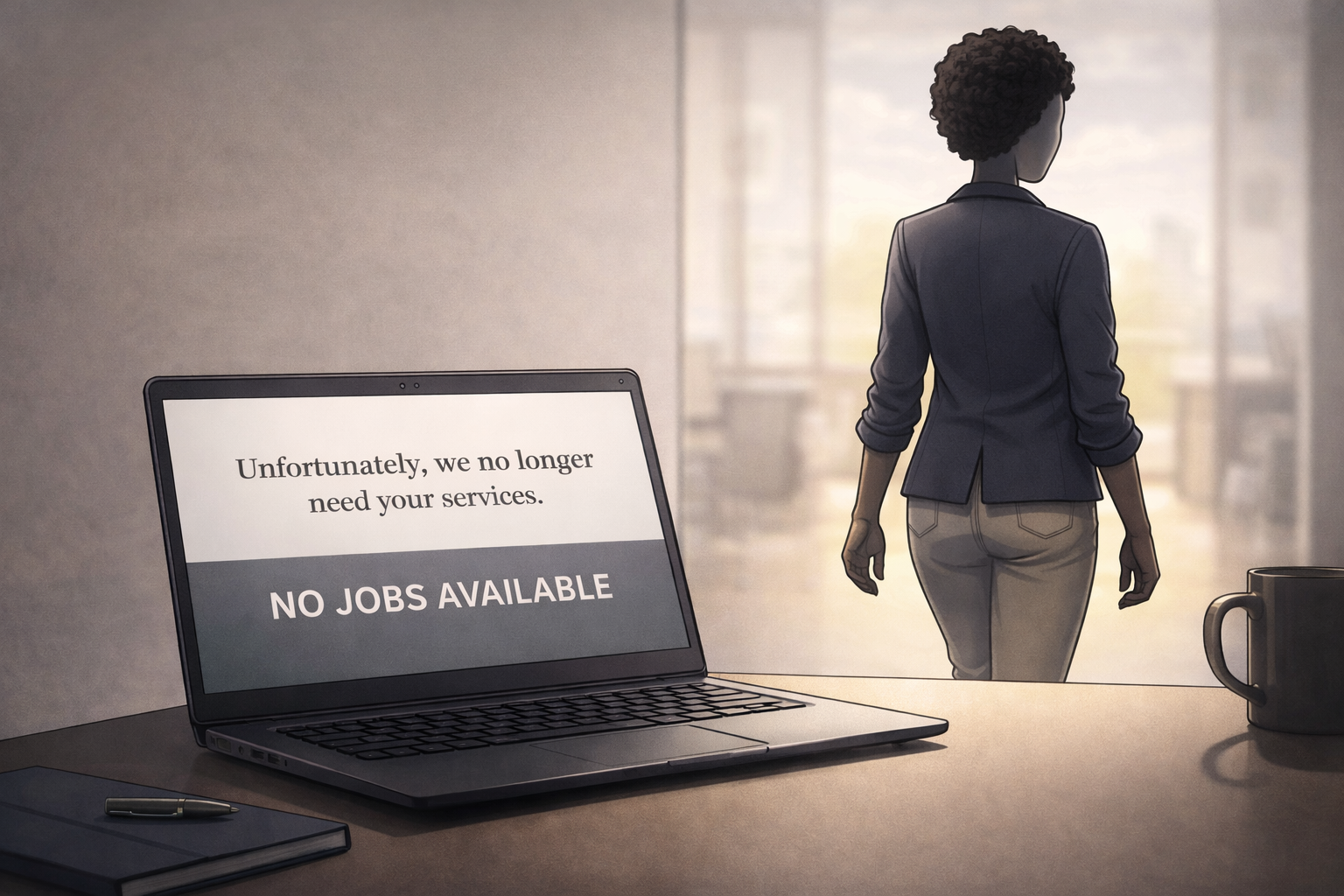
The 2026 Budget Speech confirmed what the numbers have been telling us for years. Growth of 1.6% cannot absorb millions of unemployed South Africans. The question is: when do we stop waiting — and start building?
The Government Cannot Save You: It’s time South Africans stopped waiting for a job that was never coming.
Embracing Change: Why the Government Cannot Save You
By Nomzamo · Elevate Finance Partners · elevatefinancepartners.online
Every February, a ritual plays out across South Africa. The Finance Minister tables the Budget. Analysts dissect it. The news cycle churns. And somewhere, a young person in Soweto, Khayelitsha, or Polokwane opens their phone hoping to hear that government has a plan for them.
The 2026 Budget Speech, delivered by Minister Enoch Godongwana on 25 February, contained real progress. Debt is stabilising for the first time in 17 years. South Africa was removed from the FATF grey list. A credit rating upgrade — the first in 16 years — was secured. These are not nothing.
But buried inside the same speech is a number that deserves far more attention than it received: South Africa’s projected GDP growth for 2026 is 1.6%. By 2028, we expect to reach 2%.
“At 2% growth, South Africa cannot formally employ its way out of 32% unemployment. The maths simply does not work.”
This is not a criticism of the Minister or the Budget. It acknowledges a structural truth that our public discourse has been reluctant to confront. The idea that government is the primary creator of jobs is not just outdated. This notion is quietly crushing the aspirations of millions of young South Africans. They have built their entire life strategy around a system that cannot deliver.
The Numbers That Tell the Real Story
Let’s put the 2026 Budget in honest statistical context. South Africa’s official unemployment rate sits above 32%. The expanded definition, which includes discouraged work-seekers who have stopped looking, exceeds 40%. That translates to more than 8 million people outside the formal labour market.
Official unemployment rate 32%+
Expanded unemployment rate (incl. discouraged workers) 40%+
Projected GDP growth in 2026 1.6%
Projected GDP growth by 2028 2%
Allocated to the Presidential Employment Initiative R319 million
Economists broadly agree that an economy needs to sustain growth of 5–6% annually to meaningfully reduce unemployment at scale. We are projecting less than a third of that. Government’s own Presidential Employment Initiative — the flagship active labour market programme — received R319 million. That figure, spread across millions of unemployed people, tells its own story.
South Africa has roughly 1.3 million public servants. It has roughly 8.2 million unemployed people. Even if government doubled its workforce — a fiscal impossibility — it would still leave the majority of unemployed South Africans without formal work.
The Admission Hidden in Plain Sight
The Budget explicitly acknowledged a significant issue. The Skills Development Levy is the money employers have paid for years into SETAs and the National Skills Fund. It has not yielded the outcomes government expected. Billions of rands. Years of institutional investment. Underwhelming outcomes.
More tellingly, the Budget’s most tangible relief measures were directed squarely at entrepreneurs. These measures were also aimed at small business owners — not job seekers. The VAT registration threshold was more than doubled, from R1 million to R2.3 million. Capital gains tax exemptions for small business owners were increased. Tax-free savings limits were raised.
“The relief in this budget was designed for people building something — not people waiting for something.”
Read together, these signals point in one direction: the state is quietly reconfiguring its relationship with employment. It is investing in the conditions for private sector activity and reducing regulatory burdens on small businesses. These are the right moves. But they require a different kind of South African to benefit from them. Not a passive applicant. An active builder.
The Costly Myth of the Government Job Queue
Here is what rarely gets discussed in the Budget analysis: the human cost of waiting.
Across South Africa, hundreds of thousands of people apply for government positions every year. They print application forms they cannot afford. They travel to submission points. They follow up. They wait. Many apply for the same types of posts for years. The application itself becomes a full-time activity that produces nothing, consumes real money, and quietly erodes self-belief.
Even in years where government does create posts, a single vacancy in some provinces attracts thousands of applications. The process is competitive in ways that have nothing to do with merit and everything to do with access, connections, and the ability to navigate bureaucratic systems.
We have built an entire culture around this queue. Parents tell their children that a government job is stable, dignified, and aspirational. The job is positioned as the destination — not a tool toward something larger. And so millions of young people invest their most productive years in a lottery that, structurally, can only ever accommodate a fraction of them.
“We have confused a stable salary with a life strategy. They are not the same thing.”
The narrative that positions government as the primary employment solution is not just inaccurate. It is actively harmful to the people it claims to serve. And it is time we said so, clearly and without apology.
So what is the alternative?
In Part 2 of this series, we look at what ownership actually looks like in 2026. We explore the real opportunities in the digital economy. We also discuss the honest challenges that come with them. Financial literacy is your most important first asset. The generation that changes South Africa may need to start learning all of this before they are old enough to fill in a job application.
Read Part 2: The Government Cannot Save You: What Ownership Actually Looks Like in 2026 — coming next on elevatefinancepartners.online
This post is based on the 2026 Budget Speech delivered by Minister Enoch Godongwana on 25 February 2026. Statistics are drawn from official Budget documents and Stats SA. Written by Nomzamo, Elevate Finance Partners — Empowering Faithful Stewardship, Elevating Financial Futures.
Leave a Reply